Go Escape! - Casual Ball Games
- 3.9
- Rating
- 10.00M
- Installs
- Free
- Price

 Analysis by App-foxy
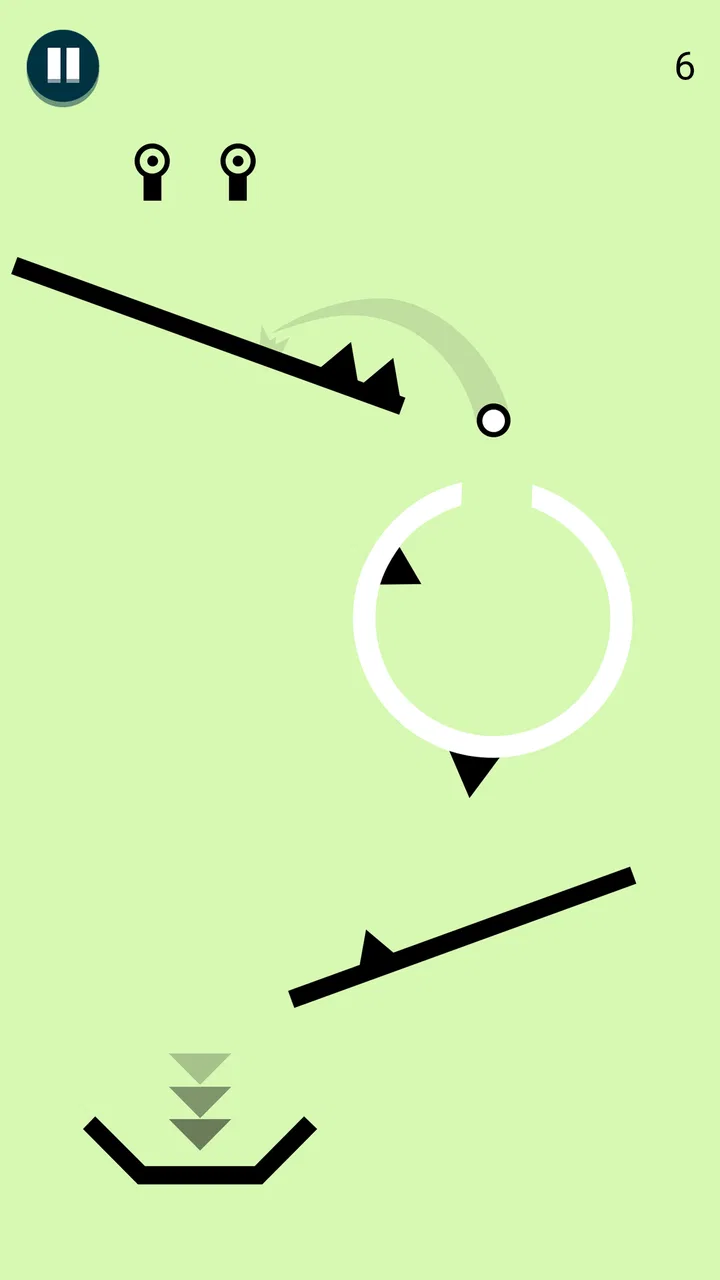
I spent time with Go Escape! - Casual Ball Games as a quick arcade game built around one simple task: guiding a bouncing ball across platforms while avoiding obstacles and reaching the finish. That sounds easy when reduced to one sentence, but the appeal comes from how quickly the game turns a small mistake into a restart. It is the kind of title I can open for a short break, play with one hand, and understand immediately without learning a complicated control scheme.
What stood out to me is its narrow focus. This is not an arcade game trying to combine puzzles, story, character collection, and long-term progression into one package. The entire experience is about timing, positioning, and reacting to the next hazard. That clarity makes it approachable, especially for someone who wants a lightweight challenge rather than a large game demanding a long session.
How the bouncing challenge feels in everyday play
The basic rhythm is easy to grasp: the ball keeps moving through a course of platforms, and I have to help it survive the route. The interesting part is not discovering complicated rules; it is learning to read the space ahead quickly enough to make the right move. A safe-looking landing can become dangerous if the next obstacle arrives immediately, so I found myself thinking one platform ahead instead of reacting only to the ball’s current position.
You May Also Like

 Blood Strike: 2.5 Anniversary
Blood Strike’s Loadouts Turn Every Drop Into a Tactical Gamble
A close look at Blood Strike’s custom loadouts: how fast access to signature weapons reshapes its battle royale rhythm, rewards preparation, and narrows the gap between fights.

 Pandora - Music & Podcasts
Pandora’s Music Is Easy to Start, but Harder to Recover
Pandora’s strength is its low-effort path from a seed to a station. Its weak spot is how much confidence it asks you to place in connection, setup, and quiet recovery.

 8 Ball Pool
 Is Built on Rivalries, Rematches, and Routine
A close look at the rivalries, rematches, shared routines, and unanswered safety questions that turn a quick pool match into a persistent mobile community.

 Samsung Music
’s Quiet Strength Is Playing What You Already Own
Its reach comes less from spectacle than from dependable access to a personal library. That simplicity is both the app’s strongest retention engine and its ceiling.

 AccuWeather: Weather Radar
AccuWeather Review: A Quick, Clear Forecast for Everyday Decisions
For everyday plans, the best forecast is the one you can understand quickly. AccuWeather makes rain timing, radar, and local conditions easy to act on, with a few trade-offs.

 Hill Climb Racing
Why Hill Climb Racing Still Turns Crashes Into One More Run
A tiny car, a bumpy hill and one more upgrade: Hill Climb Racing keeps resurfacing because its simple chaos makes every near-miss feel personal.
More From Our News Desk



That makes the game particularly suitable for short, interrupted sessions. I could imagine playing it while waiting for a coffee, during a commute break, or between tasks when I wanted something more active than scrolling. A single attempt has a clear purpose, and failure does not require me to remember a large amount of information before trying again. The restart-focused structure keeps the barrier to another attempt low.
At the same time, this design will not suit everyone. If you prefer arcade games with exploration, a story, extensive customization, or a sense of a character becoming dramatically stronger, this may feel too limited. The pleasure is concentrated in execution. Once that kind of challenge stops feeling satisfying, there is not much else here to distract from it.
Controls reward anticipation more than frantic movement
My best advice is to avoid treating every obstacle as an emergency. Watching the ball’s rhythm and preparing for the next landing is more useful than making constant corrections. When I rushed, I tended to focus on the immediate platform and miss the shape of the route that followed. A calmer approach made the game feel less random, even when a section was difficult.
Another useful habit is to treat early attempts as observation rather than wasted progress. On a first run through a tricky arrangement, I paid attention to where the ball naturally traveled, which platform offered the safest setup, and whether the next move needed to happen quickly. That mental map helped more than simply repeating the same input with greater speed.
This is one of the less obvious strengths of the design: failure can teach something immediately if I pay attention to the sequence. It is not a deep puzzle system, but it does encourage small adjustments. I began to separate mistakes caused by poor timing from mistakes caused by entering a section without planning. That distinction made retries feel purposeful.
Pressure grows through repetition, not complexity
The pressure comes from having to repeat a route after a mistake. A missed platform or collision can erase the momentum of an attempt, and that creates a familiar arcade tension: I know the action is simple, but I still want to reach the end without breaking the run. The challenge is therefore psychological as much as mechanical. A player who becomes impatient may create more errors than the obstacles themselves.
I found it helpful to pause mentally at the start of each attempt, even if the game itself keeps the action moving. Instead of immediately trying to beat a previous result, I focused first on making the opening section consistent. Once the early movements became familiar, I had more attention available for the later hazards. This is a practical way to reduce frustration without turning the game into a slow, overly cautious exercise.
That approach also reveals a trade-off. Repetition works well when I am in the mood to refine a route, but it can feel monotonous when I want constant novelty. Players who enjoy mastering short sequences may appreciate the pressure. Players who need frequent changes in objectives may find the loop too narrow after the initial attraction fades.
What the purchase model tells me about spending
The game is free to download and play, with optional in-app purchases listed from $0.99 to $2.99 per item. That gives it a low-risk entry point: I can test the controls and decide whether the central bouncing challenge is enjoyable before spending anything. I appreciate that arrangement for a compact arcade title because the first question is not whether the package is large, but whether the basic movement feels good in my hands.
I would still approach purchases carefully. The listed price range tells me the possible cost of individual items, but it does not by itself explain what each item provides, how often a player might want one, or whether spending changes the difficulty. I would not buy anything simply because I had failed several times. In a retry-heavy game, frustration can easily feel like a reason to spend even when the better choice is to take a break and return with a clearer head.
For my own use, the sensible workflow is to play free first, decide whether I enjoy repeating difficult sections, and only then consider an optional item if its purpose is clear in the purchase screen. That keeps the financial decision separate from the emotional moment immediately after a failed attempt. The free starting point is useful, but it does not automatically answer every question about value.
Fairness depends on what the player is buying
From a competitive fairness perspective, I would distinguish between personal progress and comparison with other players. The core task is an individual arcade challenge, so the main test is whether success comes from learning the route and controlling the ball rather than from paying for an advantage. The available purchase range alone does not establish that purchases affect performance, and I would not claim that they do.
That uncertainty matters if you are choosing the game for score chasing or competition. Before spending, I would check the exact description of any item and ask whether it changes the challenge, removes a failure, or simply offers a convenience. If an item affects the conditions of success, then scores or achievements could become harder to compare fairly. If it is purely cosmetic or optional in another way, the competitive concern would be smaller. The important point is to inspect the item’s role rather than assume either extreme.
For a player who only wants a private, casual challenge, this issue may be less important. I can enjoy improving my own timing without needing a formal competitive system. For someone who wants a strict test where every attempt follows identical rules, I would be more cautious and would avoid treating any paid assistance as equivalent to unassisted progress.
The game’s age rating is Everyone, which fits its accessible arcade premise. I would still judge suitability by temperament rather than age label alone. A younger player may understand the controls quickly, but repeated failure can be irritating, especially if an adult presents the game as something that should be beaten immediately. In my view, it works best when retries are treated as part of the activity rather than as a sign that the player is doing something wrong.
Who will get the most from it
I would recommend it to people who like compact arcade challenges, quick restarts, and games where a small improvement feels meaningful. It is also a reasonable choice for someone who does not want to spend time reading instructions before playing. The store summary captures the broad idea, but in practice the enjoyment comes from turning a straightforward objective into a test of patience and timing.
It is less suitable for players looking for a substantial campaign or a rich sense of progression. I would also skip it if I knew I was currently tired of retrying the same kind of obstacle. No amount of extra content elsewhere can compensate for a control loop that does not appeal to you, and this game places that loop at the center of everything.
Compared with a conventional endless runner, the appeal here is more route-focused. An endless runner often emphasizes continuous forward motion and reacting to an ever-changing stream, while this game’s platform-based structure makes each landing feel like a specific problem to solve. Compared with a physics puzzle game, it is lighter and more immediate: I am not building elaborate solutions, but I am still learning how movement and timing interact. That middle ground is where it makes the most sense.
Practical details before installing
CASUAL AZUR GAMES is the developer, and the game has been available since December 2, 2018. It is currently listed as version 2.25.07 and requires Android 7.0 or later. Those details make it a realistic option for many Android users, though I would still check the operating system on an older phone before attempting an installation.
The game has passed the scale of a niche experiment, with over 10 million installs, an average rating of 3.9 from around 136 thousand ratings, and roughly 9.1 thousand written reviews. I read those figures as evidence of broad reach rather than a guarantee that every player will enjoy it. A rating around that level suggests a mixed but generally workable reception, which matches my impression: the concept is immediately understandable, while the repetition and narrow focus will divide players.
Because it is free, the most practical test is simple. Install it, play enough attempts to see whether the bouncing rhythm feels satisfying, and notice how you react to failure before considering any purchase. If you enjoy analyzing your timing, the game can earn a place in a short-session rotation. If you find yourself wishing for a story, exploration, or a different challenge after only a few tries, that feeling is useful information rather than something to ignore.
Questions I would consider before committing time
One question is whether it is suitable for brief play. In my experience, yes: the straightforward objective and retry structure make it easy to pick up for a few minutes. The more important question is whether those short sessions remain enjoyable after the first discovery period. That depends on how much satisfaction you get from refining reactions and repeating a route.
Another question is whether a purchase is necessary to understand the game. It is free to start, so I would not spend money before deciding that the basic challenge works for me. The listed optional items cost between $0.99 and $2.99 each, but I would evaluate them individually rather than assuming they are required for normal play.
You may also wonder whether it is a good choice for competitive play. I would describe it first as a personal arcade test. If you care about strict score comparisons, inspect what any optional purchase changes before using it, because the available purchase information does not by itself explain the effect on competition. For relaxed self-improvement, that concern is much smaller.
Finally, consider whether your phone meets the requirement. Android 7.0 or later is needed, and the current version is 2.25.07. That is worth checking on an older device, particularly if you are installing games selectively to save storage or avoid unnecessary setup time.
My trust verdict after playing
I come away seeing Go Escape! - Casual Ball Games as a focused, accessible arcade option rather than a complete all-purpose game. Its strongest quality is that it knows what it wants the player to do: watch the bouncing movement, avoid danger, and improve through another attempt. I like that directness, especially when I want a small challenge with no long commitment.
My reservation is equally direct. The experience can become repetitive, and the retry pressure will not appeal to anyone who wants relaxed progress without frequent failure. The free model is a sensible way to try it, but I would keep spending deliberate because the listed purchase range does not explain every practical consequence of buying an item. That is not a reason to reject the game; it is a reason to make the decision after testing the core loop.
For me, the best use case is a short break when I want to concentrate on timing for a few minutes. I would recommend it to a friend who enjoys compact platform challenges and does not need a story or deep progression. I would point that friend toward another arcade style if they prefer endless variety, richer customization, or clearly defined competitive rules. My final recommendation is to try the free experience first and judge it by how satisfying the retries feel, not by the promise of eventual progress.
FAQs for Go Escape! - Casual Ball Games
01What is Go Escape! - Casual Ball Games about?
Go Escape! - Casual Ball Games is an engaging puzzle game where players navigate a ball through various obstacles to reach the goal. The game challenges your timing and precision as you tap to jump and avoid barriers. Its simple yet addictive gameplay makes it perfect for quick play sessions.
02Is Go Escape! - Casual Ball Games free to play?
Yes, Go Escape! - Casual Ball Games is free to download and play. However, it contains in-app purchases and ads. Players can choose to buy items or remove ads for a smoother experience, but these purchases are optional and not necessary to enjoy the game.
03What are the key features of Go Escape! - Casual Ball Games?
The game features a variety of levels with increasing difficulty, requiring players to use skillful timing to succeed. It offers simple controls, vibrant graphics, and an intuitive interface. The game also includes leaderboards and achievements, adding a competitive edge to the gameplay.
04How difficult is Go Escape! - Casual Ball Games?
Go Escape! starts off easy but becomes more challenging as you progress through the levels. The increasing complexity keeps players engaged, requiring quick reflexes and strategic thinking. It’s designed to be accessible to all ages, making it a fun challenge for both beginners and experienced players.
05Can I play Go Escape! - Casual Ball Games offline?
Yes, Go Escape! - Casual Ball Games can be played offline. This is perfect for players who want to enjoy the game without an internet connection. However, some features, like certain in-app purchases or leaderboard updates, might require an internet connection.
Pros
- Simple and intuitive controls.
- Engaging and addictive gameplay.
- Vibrant and colorful graphics.
- Suitable for all age groups.
- Quick to pick up and play.
Cons
- Ads can be intrusive.
- Limited level variety.
- No offline mode available.
- In-app purchases can be pricey.
- Lacks multiplayer features.

Go Escape! - Casual Ball Games
Gallery